

Maintenance
Ice Dams in Calgary: Why They Form and How to Stop Them
Roof Replacement Calgary·Updated November 2026·5 min read
An ice dam is a ridge of ice along the eaves that traps meltwater behind it. The water backs up under the shingles, which are only made to shed water running down, and leaks into the attic, ceilings and walls. CMHC's research found the main cause is usually warm air leaking from the house into the attic, so the fix starts below the roof, not on it.
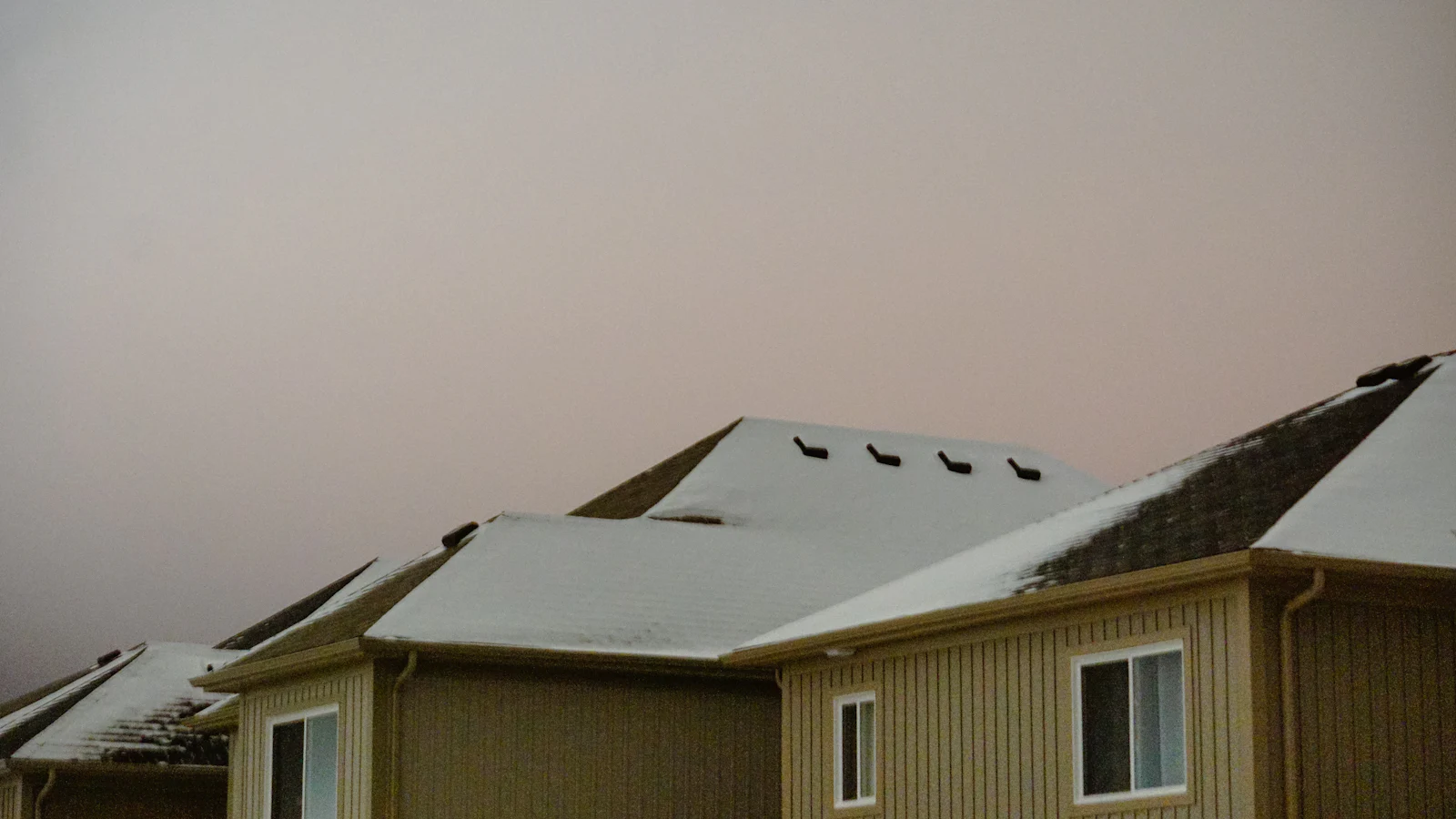
How an ice dam forms
Heat escaping into the attic warms the roof deck and melts the snow above it. The meltwater runs down to the cold overhang at the eaves and freezes. Each melt adds to the ridge, and eventually water pools behind it and works its way under the shingles.
Why Calgary gets them
Chinooks can lift the temperature quickly in the middle of winter, then a hard freeze follows. That repeated melt and refreeze builds ice at the eaves faster than a steady cold spell does, especially on homes with warm attics.
The real fix: seal, insulate, then ventilate
CMHC's guide puts air sealing first: block the gaps where warm air gets into the attic, such as around the hatch, light fixtures, plumbing stacks and ducts. Then add insulation so less heat reaches the roof. Ventilation comes last, through soffit intake and roof or ridge vents, to carry away the small amount of heat left. Get this right and the roof stays cold enough that snow doesn't melt from underneath.
What a re-roof should include
When you replace the roof, ask for ice and water shield along the eaves and in valleys, a check that soffit vents aren't blocked by insulation, and enough exhaust venting. These don't stop ice forming on a warm attic, but they protect the house if it does.
What not to do
Don't chip at ice with an axe or climb on an icy roof. Clearing the bottom metre of snow with a roof rake from the ground helps. Heat cables can be a fallback where the roof design makes sealing and insulating impractical, but they use power and don't fix the cause.
What you get for the price
The standard we ask of every roofer we refer you to
The roofer does the work, not us. Ask for each of these in your written quote and contract.
- A roofer with WCB Alberta coverage (clearance letter on request) and liability insurance (certificate on request)
- An Alberta prepaid contracting licence if they sell away from their office and take any money before the work is finished
- A written quote that lists what will be done, the materials and the price
- Manufacturer-approved installation, so the shingle warranty and any Class 4 rating stay valid
- Photos of the problem before work starts, and of the finished work
- Site left clean: old shingles, nails and debris taken away, with a magnet sweep of the yard
- A walk-through of the finished job before final payment
Before and after photos, and a written scope
You get photos of what was wrong and what was done, and a written scope before anything starts, so you know exactly what you are paying for.
Insured roofer with WCB Alberta coverage, liability certificate on request
Questions people ask
Related services
Published November 18, 2026.